
A month ago, I wrote a blog piece where I declared my love for the city of Buenos Aires, in that piece I mentioned how grand and diverse it was, and that one day I’d have to go into detail about the specific neighbourhoods, Well today I will. These are three of my favourite neighbourhoods in Buenos Aires—not ranked in any specific order.
Palermo:
By far the most popular neighbourhood for tourists in Buenos Aires, Palermo is the first place I ever encountered in the city—being a tourist myself. Therefore it makes this list on sentimental value alone.
Palermo is a hive of activity, with people buzzing around at all times. The neighbourhood has scenic streets where green trees overhang, as well as colourfully painted buildings, and walkways plastered with murals and street art—including one of Diego Maradona as a tango dancer which I always smile when seeing. If a friend were to ask me: Where should I stay when visiting Buenos Aires? I’d say Palermo nine times out of ten, due to the fact it has the most going on and has everything a visiter could want at hand.
Palermo is such a big neighbourhood that it’s often—unofficially—split into smaller sub-neighbourhoods. With the most popular of those being either Palermo Soho or Palermo Hollywood. There’s so much activity in the neighbourhood 24/7: from the Buenos Aires zoo, to the Japanese gardens, to the hippodrome, to the planetarium, to various eateries and bars, including the highly rated Don Julio steakhouse, there’s always something to do or see.
Everything is happening in Palermo. Everything. All the time.
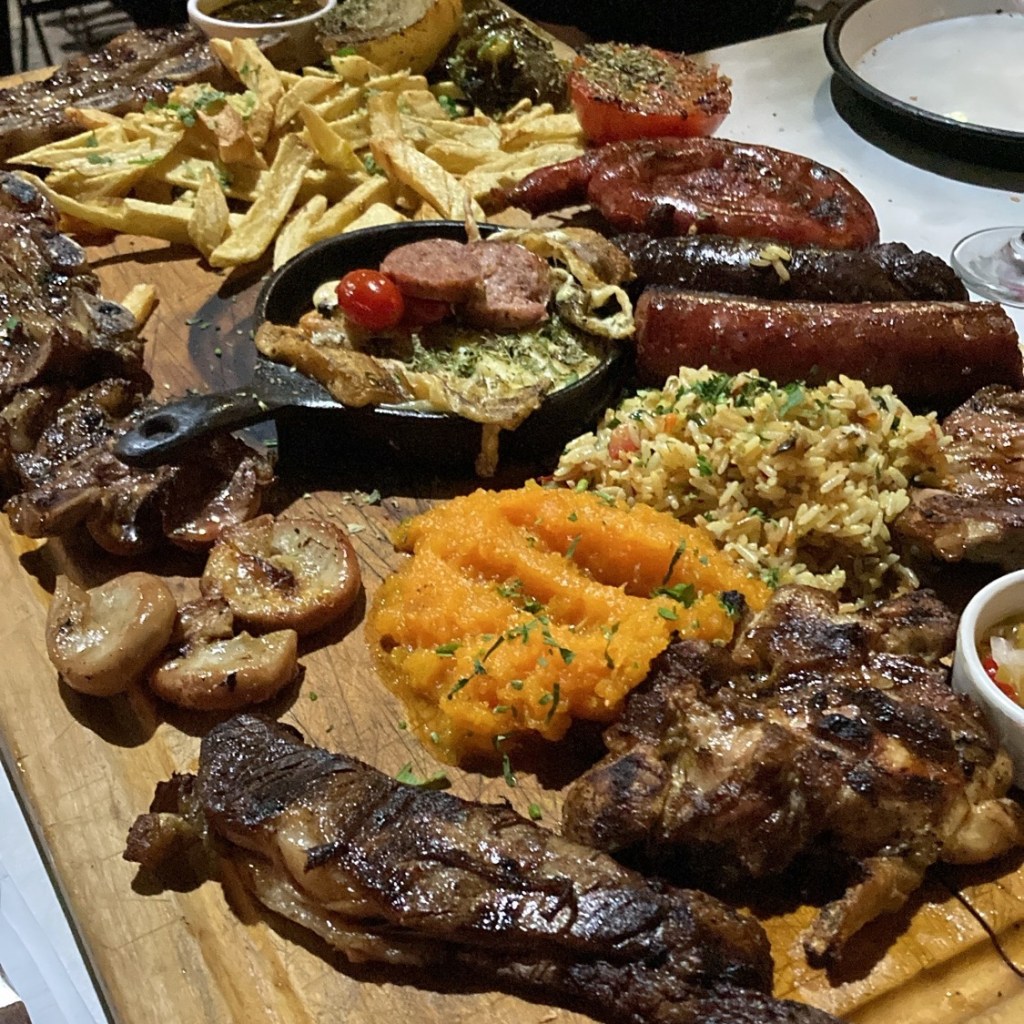
The reason I hold this mega-neighbourhood so close to my heart is because—like I previously mentioned—Palermo was the first neighbourhood in which I stayed in Buenos Aires. Somewhere on Armenia Street, I don’t remember the apartment number, Armenia 2000 and something I think. The first dinner I had in Argentina was in Palermo, in a restaurant I’ve revisited many times, called Las Petunias. My two friends and I shared an ‘Asado sharing platter’ which came with many cuts of meat I’d never tasted before, including Chinchulines (beef small intestine), and Mollejas (Sweetbreads). I have to say, it took me a while to come round to the idea of both of those delicacies. If you do ever go to Las Petunias I would highly recommend their lamb risotto or their Pastel de papa (an argentinian cottage pie), both are equal in deliciousness.
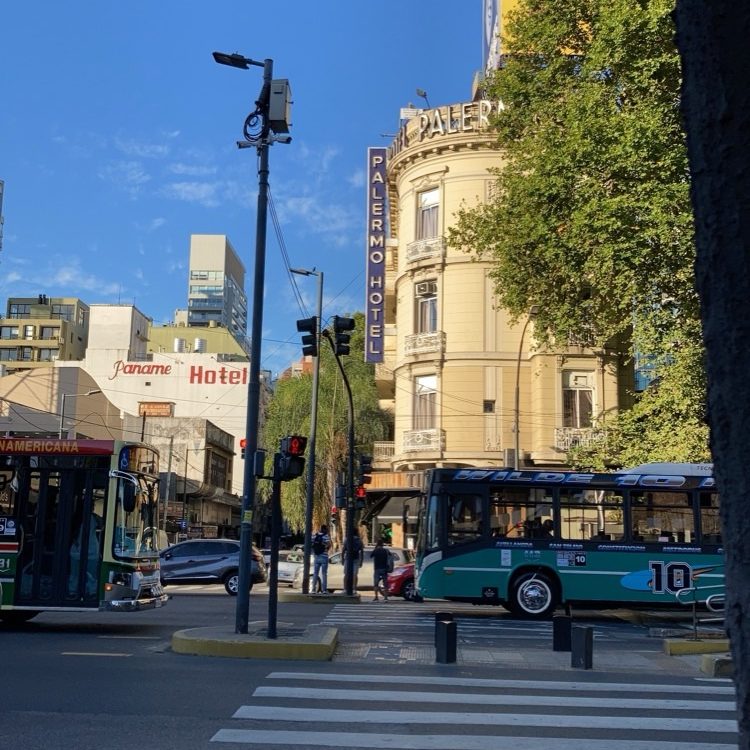
Palermo is also home to my favourite intersection in Buenos Aires, where streets Gurruchaga and Costa Rica meet. To anyone else this would just be an ordinary intersection with two very average bars (PIBÄ and Casa Temple) and a Club de la Milanesa —a chain of restaurants which are dotted all over the city. But for me, this intersection is of monumental importance. PIBÄ and Casa Temple were the first bars my friends and I went to on our second night in Buenos Aires, and that Milanesa restaurant is where we went after having travelled around Argentina for three weeks. I’ve been back to that intersection more times than I can remember, and although these three establishments are all fairly average to anyone else, to me they’re all very, very special.
Coghlan:
Next on the list—and the polar opposite of Palermo—is the tiny neighbourhood of Coghlan.
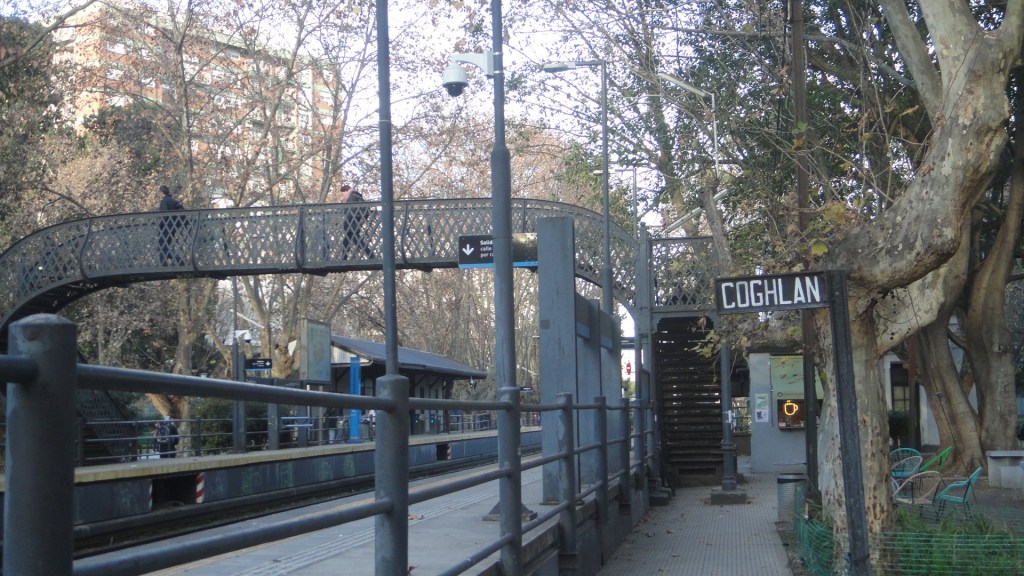
Cobbled streets, cute cafes, and the highlight of the whole neighbourhood: the train station. It’s fair to say there’s not a lot going on in Coghlan, but that’s why I love it. It’s the perfect place to spend the afternoon walking around with friends, taking photos of the small streets and quirky houses. Wasting time, but in the best way possible.
The reason Coghlan called to me in the first place was because of its unusually Irish sounding name. After a little bit of digging around, I found out that the neighbourhood was named after John Coghlan, the man responsible for overseeing the construction of the train station in the neighbourhood—a job he did so well that they named it after him. He wasn’t the only Irishman in Coghlan though, many workers from the British Isles settled there whilst constructing the railway lines. Their influence is still clear to see in the neighbourhood today, with a variety of houses looking not so dissimilar to ones you’d find in an English city suburb.
I suggest visiting Coghlan if you like the idea of a small town within a city. It genuinely feels like somebody picked up a sleepy, countryside town and dropped it into the core of Buenos Aires. I believe a great indication of a secure, peaceful neighbourhood is the freedom of which kids play football in the plaza. In many places it’s dying, but not in Coghlan. Even after dark you can pass by a small plaza near the train station and hear shouts of GOLLLL and FOUL EH, two very welcome disruptions of the peace in my opinion.
Barrio Norte:
Having done a quick google search to write this piece, I discovered that ‘Barrio Norte’ isn’t actually an official neighbourhood, but rather a section of the Recoleta neighbourhood. With that being said, I’m still going to put Barrio Norte in my list just because I love that area.

The neighbourhood—despite being near enough in the centre of the city—is beautiful. The architecture in the neighbourhood is one of the reasons why people come to Buenos Aires and are often shocked by how lovely the buildings are. The neighbourhood has a few parks and plazas which are great places to stroll around, as well as pass through when they have small markets on—usually selling homemade crafts and bracelets.
As well as astounding architecture, Barrio Norte is home to the Recoleta cemetery, the place where many iconic Argentines have been laid to rest. There are some really interesting myths and true stories that come with the cemetery and some of the mausoleums are truly impressive. I would highly suggest a visit.
Another key component of Barrio Norte is the amount of embassies there, and on the noche de las embajadas (night of the embassies), you can make your way around a few as they open their doors to the public. Even if you’re not particularly interested in ambassadorial buildings, it’s a really fun event where you can get a taste of various different cultures whilst not even leaving the neighbourhood. Adding to that, you get to admire the beautiful streets as you walk from one embassy to another, and that’s a treat in itself!
It’s a great way to spend an evening—plus you might even get some free Indonesian soup.



 Albert's Travel Companion
Leave a comment