The county where gravy flows as freely as its rivers, where you’re probably more likely to run into sheep than a person, and where skies are grey eleven out of the twelve months a year. Of course, it’s Lancashire.
After that short—and maybe exaggerated—description of the Red Rose county, you may be asking yourself, “why on earth would anyone want to live there?”, and you’d be right to ask that—in fact, a lot of the time I ponder it too. In winter the days are wet, dark, and cold. In summer the days are long but full of rain. However, despite everything I’ve just mentioned, you should also take into consideration that Lancashire is a great place to live, and I’ll tell you why.
You’re driving on a tiny, winding road through the Ribble Valley, overgrown hedges obscure your view of any oncoming traffic, and if a crazed farmer comes whizzing around the next bend in a tractor you may end up in a roadside ditch. It’s dangerous, but also an exciting driving experience. After concentrating intensely on trying to not hit one of the millions of potholes in the road, suddenly, out of nowhere, the hedges seem to disperse and the awfully paved track opens up. You’re met with a view of lush rolling hills, green fields for as far as the eye can see, and tiny white specs in the distance which you can only assume are sheep—it would be a well educated guess.
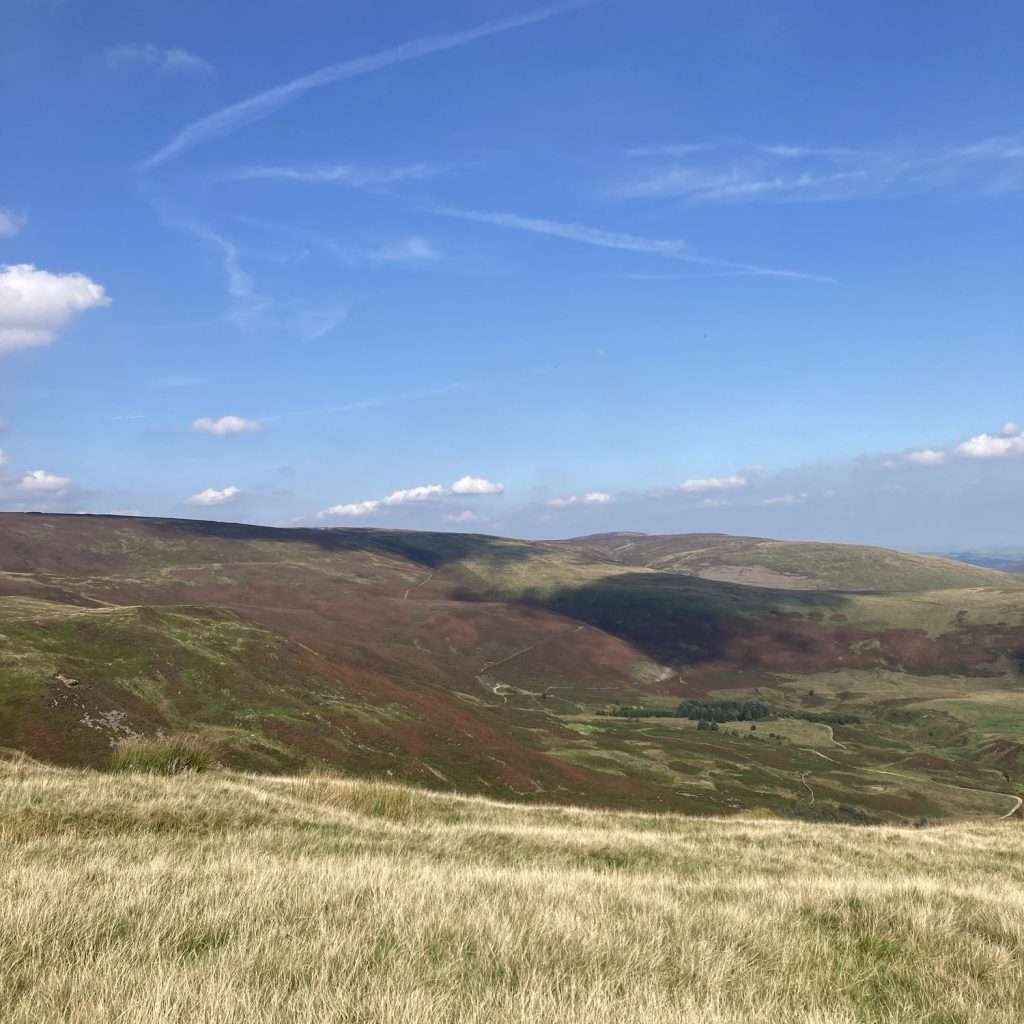
You pull up on the side of the road, lace up your hiking boots, and set out walking on one of the countless trails that the county has to offer. Along the way you may encounter marshlands that will try and leave you stuck in the mud, a boisterous bull that may take a particular liking to your bright red shirt, or even a grouchy farmer who claims that you’ve gone off route and are encroaching on their land. It’s all part of the adventure, but it’ll be worth it when you make it to your destination: a quiet, impeccably kept village which looks like it’s been frozen in time for hundreds of years.
Walking past houses with their dates of construction proudly on show—anything classed as a ‘new build’ here would have been built later than the 1800’s. The streets are most likely cobbled, there’s a small stream running through the village, and the bridge or church is the main attraction.
It’s simplicity in the best way imaginable.
After covering the entirety of the village in a whole ten minutes, you realise the only place to quench your thirst and kill your hunger is the local pub. It’s probably one of the oldest—and most important—buildings in the village. There you can relax and enjoy the warmth of a cozy log-burning fire, whilst drinking a pint of local—and delicious—beer (of which there are plenty to choose from). You can also fill up on some proper ‘Pub grub’.
One thing that always annoys me when speaking with anyone who isn’t English, is the customary, judgemental question they always seem to serve up: “Why is British food so bad?” The reason it bugs me so much is because it’s simply not true, especially when talking about the local cuisine of Lancashire. Warm Morecambe Bay potted shrimp on crusty artisanal toast, a rich and hearty Lancashire hotpot, a zingy and powerful Lancashire cheese bomb, golden Fish & Chips fried to perfection acompanied by a small pot of gravy (this may not particularly Lancastrian, but definitely worth the mention). These are all examples of food that is well worth a trip to Lancashire just to try, it’s an awful stereotype that English food is bad, I can’t speak for the whole country, but in Lancashire the food is as heartwarming as anywhere in the world.
If you’re looking for peace and quiet, I’d suggest no better place than the Lancastrian countryside, even on hikes of ten miles you may not see another soul (just sheep and cattle). Often overshadowed by its much noisier, more popular, slightly more northern neighbour, Cumbria, it seems as if holiday goers haven’t yet discovered that there are plenty of beautiful places to stay here as well—and probably for a lot less money. The regions are bound together geographically, but couldn’t be further apart in terms of tourism. The Lake District is known worldwide for its scenery and beautiful villages, but not even people in England realise that just a little further south you can get all that and a lot less tourism. I’m not complaining though, I like the quiet.
Even though Lancashire doesn’t have great lakes like Cumbria, the rivers here are brilliant and in abundance. As well as this, the wildlife in Lancashire is on par with anywhere else in England, just stepping into the countryside you’re likely to see owls, deer, various birds of prey, kingfishers, herons, and even stoats. It’s as if you were living in a nature reserve. Therefore it adds just another layer to the wonderfulness of the whole Lancastrian experience.




 Albert's Travel Companion
Leave a reply to Joe Bradley Cancel reply